

Faucet
Ningbo Yowin Pipe Industry Co., Ltd. specializes in offering include faucets, kitchen faucets, basin faucets, thermostatic faucets, and related plumbing accessories such as faucet cartridges and mounting brackets.
You Professional Faucet Suppliers!
We specialize in manufacturing premium faucets, including kitchen faucets, basin faucets, and thermostatic faucets, along with essential plumbing accessories like faucet cartridges and mounting brackets. Designed for durability, functionality, and modern aesthetics—trust us for high-performance water solutions!


Why Choose Us?
Rich Experience
Ningbo Yowin Pipe Industry Co.,Ltd. is specialized in production of various stainless steel corrugated hoses, braided hoses and stainless steel shower hose for more than 15 years.
Strong Production Capacity
Till now, our production capacity is 3 000 000 pcs for corrugated hose and braided hose every year. We also can produce OEM products according to our customer's samples or drawing.
Reliable Product Quality
Strict quality control covers every procedure, from material sourcing and processing through to testing and packing. We understand that high quality and innovative products, quick lead times, accurate shipping and friendly service is what you want.
Wide Range of Applications
Mainly produce the corrugated hose, braided hose, shower hose etc. Our Products widely use in bathroom and kitchen room for water industry and gas industry. Our high qualified goods receive well reputation from our customer all over the world.
What is Faucet?
A faucet is a valve or tap that controls the flow of water in a plumbing system. It is typically installed in sinks, bathtubs, showers, and other fixtures to regulate the water supply. Faucets can be made from various materials such as brass, chrome, or stainless steel, and they come in a variety of styles and designs to suit different aesthetic preferences.
Advantages of Faucet
Lead-Free
The number one advantage of stainless steel faucets is they are lead-free. All plumbing fixtures manufactured in the United States are safe, but some materials contain a minute amount lead. Stainless steel doesn’t, so you can rest assured it won’t release lead into the water that comes out of the faucet. As an aside, if your household plumbing is old, it might contain lead and need to be replaced. If you’re not sure, we can inspect your plumbing to determine the lead risk.
Durable and Easy to Clean
Stainless steel faucets are also durable and clean-up is a breeze. These faucets can last as long as 50 years or more if cared for properly, and you won’t have to worry about stains. Stainless steel is favored by many consumers not only for their plumbing fixtures but also for their appliances because it doesn’t corrode or rust. Copper fixtures can turn green over time, even if you keep them as clean as possible. Chrome fixtures are often stained by hard water deposits.
Environmentally Friendly
The manufacturing of stainless steel does not require plating and these faucets can be recycled once you’re done with them. This helps the environment both during the production of your new faucet(s) and when you’re ready to make a change again. You can feel good about your purchase and the installation of your new faucets. They will help improve your carbon footprint, especially if you install a water flow regulator, as well.
Types of Faucet
Compression Washer Faucets
The compression washer faucet is the grandfather of all faucets. This model has been around since the beginning of time (well, since the beginning of indoor plumbing, at least). As the name suggests, compression washer faucets utilize washers to create a watertight seal.
Disc Faucets
These single-lever faucet types with cylindrical bodies are the newest designs in modern faucet technology. They supply both hot and cold water by mixing them inside a pressure balance cartridge chamber. At the bottom of that chamber, two ceramic discs work to control the volume of water flow.
Ball Faucets
A ball faucet is right at home in either the kitchen or the bathroom. As the first washerless faucet, they are easily identifiable by a single handle that rotates over a ball-shaped cap atop the base of the faucet spout. This ball features chambers with rubber O-rings and spring-loaded rubber seals.
Cartridge Faucets
Cartridge faucets are ideal for bathrooms and kitchens. While they do bear resemblance to tried-and-true compression faucets, the cartridge types offer some enhancements that make them easier to use.
Touchless Faucets
When it comes to avoiding messes and minimizing the spread of hand bacteria, touchless faucets certainly have their benefits. They are motion-activated, with only one handle to regulate water temperature. They allow for a simple, mess-free handwashing experience.
Touch-Activated Faucets
If touchless isn’t your thing, you can also opt for touch-activated faucets. A simple touch prompts the sensors in the spout to initialize the water flow.

Standard options for the faucet material include brass, stainless steel, plastic, and zinc. Brass is the most popular choice. It’s durable and easy to cast, and companies offer a wide variety of models and finishes. Some have sprayer heads made of plastic, so they weigh less and stay cool to the touch; other parts might be made of zinc.
Brass is usually alloyed with lead to make it easier to cast. By law, faucets sold in the U.S. can’t contain more than 8 percent lead, but even that amount can contaminate water sitting in the faucet body for more than a few hours. Running the tap for a few seconds will flush it out.
Solid stainless steel is another good choice, but it’s more expensive than brass. (Don’t confuse it with stainless-steel finishes applied over brass.) Some companies apply a clear protective coating to stainless steel to shield it from water spots and fingerprints.
Plastic or zinc faucets are the least durable option. They may be designed to look like brass, but they’re made from a much cheaper material. The best way to tell them apart is to pick them up—plastic and zinc are light, while brass has heft to it.
Understanding the Different Parts of a Common Faucet
Aerator
Indoor faucets usually have aerators at the tip. This small but valuable part consists of a mesh responsible for the consistent water flow. Since it controls water pressure, it reduces water splashing in the sink. Moreover, the mesh gathers small water particles and softens the flowing water. Such water is healthier for the skin and tastes better.
Mount
A faucet usually has to sit on something. A deck mount is the part between the sink and the faucet on which the faucet is placed. Although it’s possible to mount the faucet to a wall, doing so might cause pipes to freeze in cold climates.
Spout
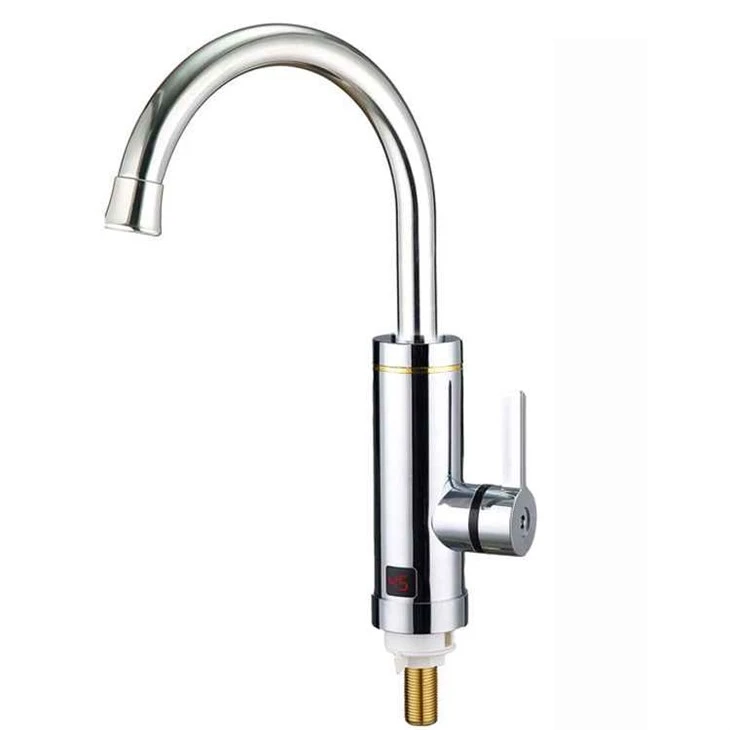
The spout is the opening on the faucet through which water flows last. Spouts vary in design, making each suitable for different needs. For example, a straight spout is long and practical in design. On the other hand, a gooseneck design is easily distinguishable by its rounded spout. As such, it’s great when you need to fill the coffee pot with water. Although these are the most common types, there are other models available, too. It’s up to homeowners to choose the design they like the most.
Handle
The part of the faucet everybody knows is the handle. There are two types of handles: the single handle or the double handle. The single handle is a more common option for a kitchen. Move the handle sideways, and the water will flow. Managing the double handle requires a bit more effort. Both handles need to be adjusted for the water to flow at the right temperature. They also look more elegant and timeless.
Body
The faucet body is where water stays before going out. Although there are three types, their purpose is the same – to store the hot and cold water. The single-hole body is standard on single or two-handle faucets. It contains valves inside where hot and cold water are mixed.
Valve
Valves control the water flow and temperature. Modern models are cartridge-like, so replacing them is relatively easy. The best type of valve will have a ceramic disc, making it durable and less prone to leaking.
Remove existing faucet
If you're replacing an old faucet, remove it from the sink or countertop to get an accurate measurement. Shut off the water supply first, then follow the manufacturer's instructions for disassembly.
Measuring Mounting Hole Spacing
Measure the distance between the centers of the two outer holes where the faucet is mounted. Most bathroom faucets come in either a 4-inch or 8-inch configuration, but there can be variations, so measuring this distance accurately is critical.
Measure the spout height
The spout height is the distance from the bottom of the faucet to the highest point of the spout. Measure vertically to get the correct height.
Measure the outlet range
The outlet range refers to the horizontal distance from the center of the faucet body to the tip of the outlet. Measure it to see how far the water will reach the sink.
Measure Faucet Width
Measure the width of the faucet base. This dimension is critical to ensuring the faucet fits properly on the sink or countertop.
Measure the handle gap
If the faucet has a separate handle, measure the distance from the center of the faucet body to the furthest point of the handle when the faucet is in the closed position. This measurement will help you know if the handle has enough room to operate comfortably.
Note any additional features
If your faucet has add-ons, such as pop-up drains or pull-out sprayers, note their dimensions as well.
Consider the type of faucet
Based on your sink or countertop configuration and the measurements you take, determine whether you need a single-hole, center-mounted, or multi-hole faucet.
Signs You Require a New Faucet



Dripping Faucet
One of the most obvious signs of a faulty faucet is when it starts to drip. Even a small leak can waste a lot of water over time and add extra costs to your bills. It can also cause damage beneath your sink. A professional may be able to fix the problem by adjusting the faucet. If this fails to resolve the issue, it may be time to replace your faucet.
Low Water Pressure
If you notice a decrease in water pressure coming out of your faucet, there is likely significant corrosion or hard water accumulation. It’s difficult to clean out the buildup or corrosion, so it’s best to install a new faucet. If you have low water pressure on all of your faucets, then you may need a plumbing professional to assess the problem.
Leaking Faucet or Faucet Handle
Faucet leaks can cause mold, wood rot, and structural damage to your home. If the handle is loose or leaking, it may be a sign that you need to replace the faucet. Sometimes, you can solve the problem by replacing or tightening the affected parts of the faucet. If this doesn’t work, it’s time for a new faucet.
Rust, Grime, or Mineral Deposits
Rust, grime, and mineral deposits are among the major signs that you need to replace your faucet. Due to the presence of hard water, mineral deposits accumulate inside your faucet, making it difficult for the faucet to do its job. Rust will cause your faucet handle to crack when you try to twist it, and grime will give your faucet an unpleasant look.
Creaking Handle or Other Impaired Components
If the handle or some other components of your faucet creak when you try to use it, then it is likely time for a replacement. When damaged handles make creaking noises, the stem is likely far gone. The problem may be resolved by coating the handle stem with the plumber’s grease.
Spitting Faucet
Is the water from your bathroom or kitchen faucet sputtering or spitting? This is a common problem that can be caused by a clogged aerator. The aerator is a small screen at the end of the faucet that helps to control water flow. If the clog is substantial or difficult to clear, then it may be time to replace the faucet.
Noisy Faucet
Unusual sounds coming from your faucet is a sign that there could be something wrong with the internal components of the faucet. This usually means you will need to replace it. Clanking or clicking sounds are usually caused by cracks in internal parts. A screeching sound may be a sign that the faucet’s rubber washer has hardened. It has to be replaced.
Aging Faucet
Your faucet’s lifespan is dependent on its make and model. To determine the lifespan of your faucet, search the manufacturer’s website using the model number. The average lifespan of a faucet is 15 years, so if your current faucet is older, then it may be time for a replacement.
Bad Water Smell or Taste
The first thing you need to do is find out if the smell or taste is coming from the tap water itself or a single faucet in your home. If the smell or taste is the same in all the faucets, you may need to call your water company to fix the issue. If it’s coming from one faucet, then it could be due to wear and tear inside the faucet or piping. In this case, it’s best to call a plumber or install a new faucet.
Mold Formation
A faucet that leaks can cause mold to form. If you notice any black spots or mold growth near the faucet, then you should have a professional check it out. Mold can cause health problems and it could also spread to other areas of the home.
How to Clean & Maintain Your Faucet
To clean a brass faucet, use a mild soap or detergent with hot water on a soft cloth. Without a protective coat, brass finishes are easily scratched or scuffed. Avoid acidic fluids and astringent or abrasive cleaners as they can further damage the top coat of a brass finish, dulling the shine over time. Oxidation is also possible with brass finishes. To remove oxidation from a brass faucet, create a paste with baking soda and white vinegar and apply it with an old toothbrush. Let it sit for about half an hour before rinsing thoroughly and patting dry with a soft cloth. You can add a polish to complete the process as well. Lemon and table salt also work well on solid brass faucets to remove stains. As brass is prone to tarnishing, a polish/lacquer/wax or even oil (mineral, olive, linseed, etc.) helps keep brass shiny and protected for long-lasting shine.
Routine cleaning with soap and water preserves stainless steel faucets’ sheen and integrity. Stay away from abrasive cleaners and scrubbers, like steel brushes, as they scratch and dull stainless steel. Simply rub and dry in the direction of the grain to optimize its appearance. Rinse any cleansers off stainless steel quickly to prevent corrosion. Drying stainless steel faucets after use prevents water marks and surface rust. Don’t let rags, cloths and sponges dry on stainless steel, as they also dull its shine.
While durable, chrome’s shine can often get lost behind surface blemishes like fingerprints and water spots. Remedy splotches with a dry buff using a soft cloth. Soap and water is a staple for cleaning chrome, with a soft cloth or sponge, so long as it’s rinsed and dried afterward. A 50/50 mixture of water and white vinegar is also a cleaning option for chrome. Be sure to not let it sit for too long as chrome finishes are particularly susceptible to damage from extended exposure to vinegar. Like most other finishes, avoid using abrasive soaps and scrubbers on chrome faucets.
Routine cleaning is necessary to keep bronze finishes beautiful and free from corrosion, green film, and the dreaded deterioration. Gently wipe down your bronze faucet daily with a soft microfiber cloth to remove any soap or toothpaste residue and dust, as they can all eat away at a bronze finish. Clean bronze finishes with a teaspoon of salt mixed in one gallon of warm water, and use a soft-bristle brush to apply the mixture. To deep clean, add one teaspoon of salt to one cup of white vinegar, and add flour until it creates a paste. Coat the bronze faucet with the paste, let it dry for one hour, and rinse off with warm water. Always finish by drying your faucet with a soft cloth. However, avoid washing oil-rubbed bronze too often and instead gently wipe your faucet with a dry soft cloth after each use. Stick to cleaning your faucet with a damp soft cloth with clean water, and dry immediately after.
Polished nickel takes well to regular maintenance with a quick wipe down using a wet cloth, if not a damp, soapy washcloth, and a buff dry. Polished nickel is prone to showing fingerprints and water spots like chrome, but needs a bit more maintenance to maintain its luster. Like brass, nickel can also oxidize over time, especially if the top-layer polish cracks or chips, so regular maintenance is needed for polished nickel faucets. A damp rag with white vinegar is sufficient to gently rub off water spots when needed. For a more intense clean, spray a disinfectant on and leave to set for a minute before using a toothbrush to scrub small or tricky to reach areas (like edges). Remember to rinse the cleaner off the faucet before buff drying with a clean rag.
Unlike polished nickel, brushed nickel doesn’t show fingerprints or water spots. However, the maintenance is pretty low-key, a damp cloth wipe down is sufficient on a daily basis. Like chrome, brushed nickel is durable and is easy to clean. Corrosion is possible if you use harsh cleaners, so be sure to avoid using abrasive cleaners and scrubs.
How To Replace Shower Faucet
Step 1: Prepare the area
Before you begin, place your tools on a towel or drop cloth close to the shower. To prevent small parts from rolling away into the drain, you can also place a damp cloth or towel over the drain.
Step 2: Shut off the water
Identify the main shut-off valve for your home’s plumbing and turn it off. This will ensure that no water is running during the repair process.
Step 3: Remove the old showerhead
A screw often attaches the shower head to the pipe running through the wall. To remove it, use a pair of pliers to turn counterclockwise until it becomes loose and can be pulled off.
Step 4: Remove the old shower handles and faucet
How you remove your shower faucet will depend on the style, make, and model of your faucet, but typically you will need to unscrew the handles and remove them from the wall. You can use a small screwdriver to remove the covers that may be over the faucet handles in some cases. In other cases, there might be a set screw beneath the handle that can be removed using an Allen wrench of the appropriate size.
Step 5: Keep removing parts
After removing the cover or handle, you will be able to access the parts and components located beneath them. These parts can be either unscrewed or pulled out depending on your kind of shower faucet. You should keep removing the parts until you finally reach the shower valve, i.e., the plumbing pipe that marginally protrudes out of the wall.
Step 6: Install the new handles and shower faucet
Once all the parts are removed, it is time to install your new shower faucet. To begin, read the instructions on the package of your new shower faucet carefully to ensure you install it correctly. After that, attach the handles and shower head with the screws provided in the package. First, if the new faucet cannot use the existing cartridge, take out the old one and replace it. Install the cover or sleeve and attach the handle according to the manufacturer’s manual. Once everything is in place, move on to the next step. Attach the faucet to the adapter and tighten it in place.
Step 7: Install the new showerhead
To install the new shower head, place some Teflon tape clockwise on the threads of the shower arm. Then, attach the new shower head to the arm and tighten it in place by turning it clockwise. Tighten further using a rag and pliers.
Step 8: Turn on the water and look out for leaks
Once everything is installed, turn the main shut-off valve for your home’s plumbing back on and test out your newly installed shower faucet. Make sure that there is no water coming out of any of the connections and look for any leaks or drips. If you find any, tighten the connection further until it stops.
Our Factory
Our facatory was established in the year of 2005, who mainly produce the corrugated hose, braided hose, shower hose etc. Our Products widely use in bathroom and kitchen room for water industry and gas industry. Our high qualified goods receive well reputation from our customer all over the world. We have our own production area around 20000 square meters, and has our own hydraulic extrusion machine, CNC machine, and automatic welding machine and our own test machine to do quality control. Till now, our production capacity is 3 000 000 pcs for corrugated hose and braided hose every year.


Ultimate FAQ Guide to Faucet
We're professional faucet manufacturers and suppliers in China, specialized in providing high quality customized service. We warmly welcome you to wholesale discount faucet made in China here from our factory. Contact us for pricelist.
